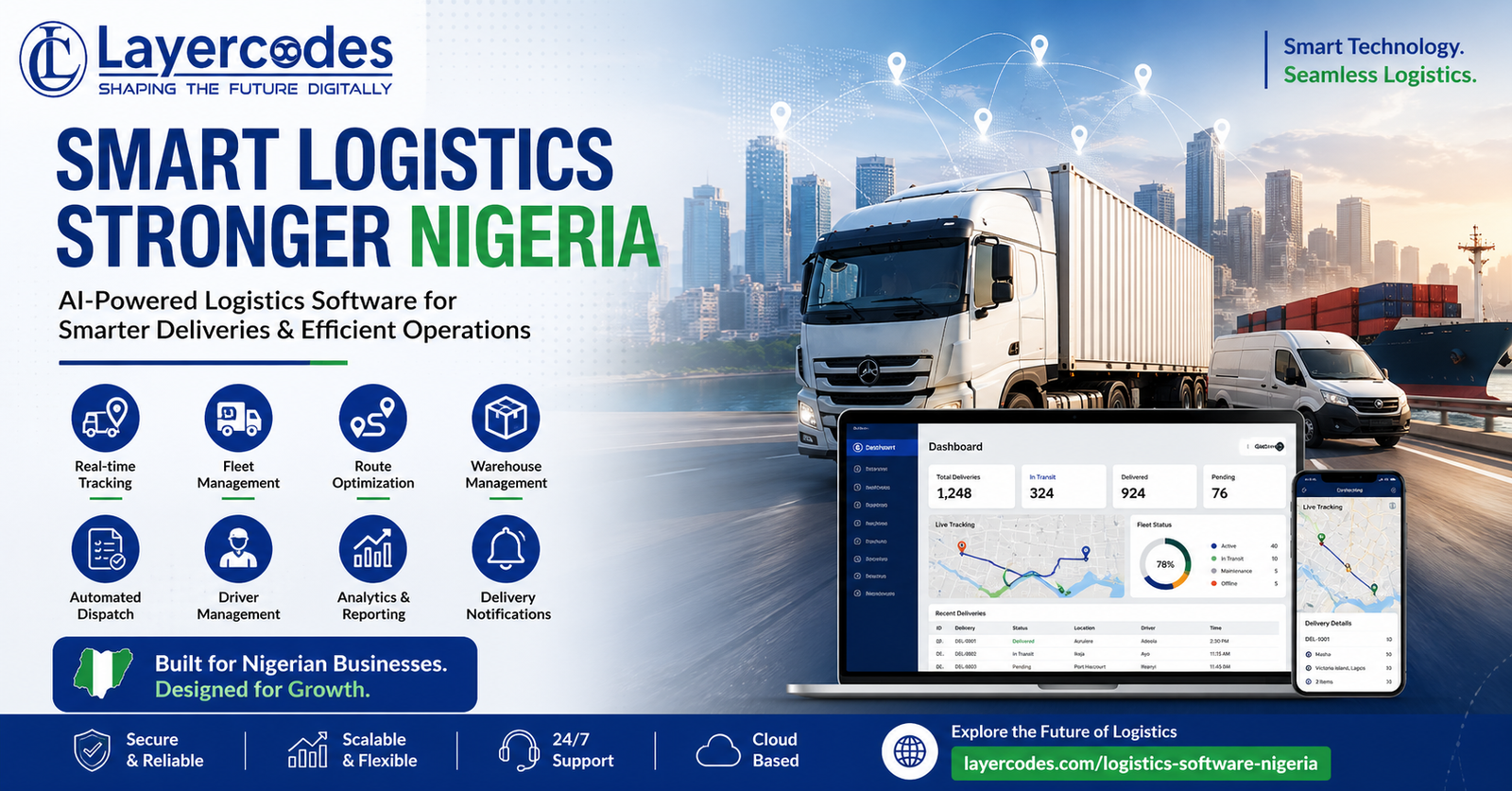
The Future of Logistics in Nigeria: Scaling with Digital Automation
The logistics industry in Nigeria is evolving rapidly. With the rise of eCommerce, courier services, and supply chain expansion, businesses are under pressure to deliver faster, cheaper, and more efficiently.
However, many companies still rely on manual processes like spreadsheets and phone calls — leading to delays, errors, and high operational costs. This is where logistics software in Nigeria becomes essential.
What is Logistics Software?
Logistics software is a centralized system that helps businesses manage complex moving parts from one dashboard, including:
- Fleet operations: Real-time monitoring of your assets.
- Delivery tracking: End-to-end visibility for dispatchers.
- Shipment management: Automated documentation and sorting.
- Warehouse coordination: Inventory and space optimization.
Why Nigerian Businesses Must Automate Now
Without automation, companies face delivery delays, high fuel costs, and poor visibility. By adopting logistics automation in Nigeria, businesses can optimize routes, reduce costs, and drastically improve the customer experience.
Specialized Fleet Management
Managing vehicles manually leads to inefficiencies. With specialized fleet management software in Nigeria, businesses can track vehicles via GPS, monitor driver performance, and reduce fuel waste.
Courier & Last Mile Excellence
Courier companies handle high volumes of deliveries daily. Using courier management software in Nigeria allows for automated dispatch and improved success rates.
Furthermore, the "Last Mile" is the most critical stage. With last mile delivery software in Nigeria, companies can optimize delivery routes to ensure packages arrive on time, every time.
The Power of a Transport Management System (TMS)
For larger operations, a transport management system in Nigeria is essential. It helps plan shipments and reduce logistics costs by up to 30% through algorithmic route planning.
Is Logistics Software Affordable?
Modern solutions offer affordable SaaS pricing and scalable plans. Discover the cost of logistics software in Nigeria to find a plan that fits your growth stage.
City-Specific Challenges: Lagos & Abuja
Logistics challenges vary by geography:
- Lagos: Heavy traffic and massive delivery demand require advanced systems in Lagos.
- Abuja: Structured business operations require the reliable logistics systems found in Abuja.
Conclusion: The Future is Automated
The future of logistics in Nigeria is driven by AI-based route optimization and real-time tracking. Logistics software is no longer optional — it’s a necessity for growth.




Leave a comment